A Doctor’s Dilemma
In the intense environment of the emergency room, the interplay between planning and action isn’t just about efficiency—it’s a matter of life and death. My friend Joel, a seasoned ER doctor, has shared numerous stories with me, demonstrating the vital importance of both elements.
Take, for instance, the pivotal task of securing an airway in an emergency, which means inserting a breathing tube down someone’s trachea so they have enough oxygen. This procedure often involves the patient not breathing for a few moments, so it is extremely important to get it right. After years of rigorous training, doctors like Joel have learned and rehearsed a meticulously planned procedure designed to safeguard their patients’ well-being.
However, Joel has recounted moments when swift, decisive action required deviating from the plan. He has made the split-second decision to skip all steps of the algorithm and make an incision in the patient’s neck to insert the tube directly into the trachea. This is a rare occurrence, but it can be the difference between life and death.
Joel’s insights extend to his role as a mentor for interns, guiding them through the dynamic balance of planning and action in their journey toward becoming proficient doctors. Many interns arrive armed with extensive theoretical knowledge and elaborate plans for every conceivable scenario. Yet, despite their preparation, they often grapple with a sense of unreadiness when confronted with real-life patient care because patients do not always follow the textbook.
Some interns will list all the investigations that they could do for the patient yet are unable to decide what test to actually order. Joel teaches them that the role of an ER doctor includes the “decision point” where one must choose the next step forward. While planning is crucial, this decision point indicates action, which will often determine the patient’s outcome.
Conversely, Joel recounts situations with interns who, upon completing their ICU placements, show an unwarranted sense of overconfidence. Despite exposure to a variety of medical conditions, these interns lack the depth of knowledge necessary for comprehensive patient care within the unpredictability of an ER setting.
Being decisive without the full planning and training of a complete residency can be dangerous. It’s the idea that “you don’t know what you don’t know.” Joel underscores that true competence requires a methodical, planned approach based on sound medical knowledge instead of narrowly heading down one path only to realize you missed other potential diagnoses.
Joel’s experience is a great example of the profound wisdom in embracing both planning and action. While planning offers direction and confidence, action brings your aspirations to life, propelling you forward in your pursuit of growth and discovery. Whether navigating the complexities of medicine or leading an organizational change, finding healthy tension between planning and action is essential for success.
Real-Time Assessment
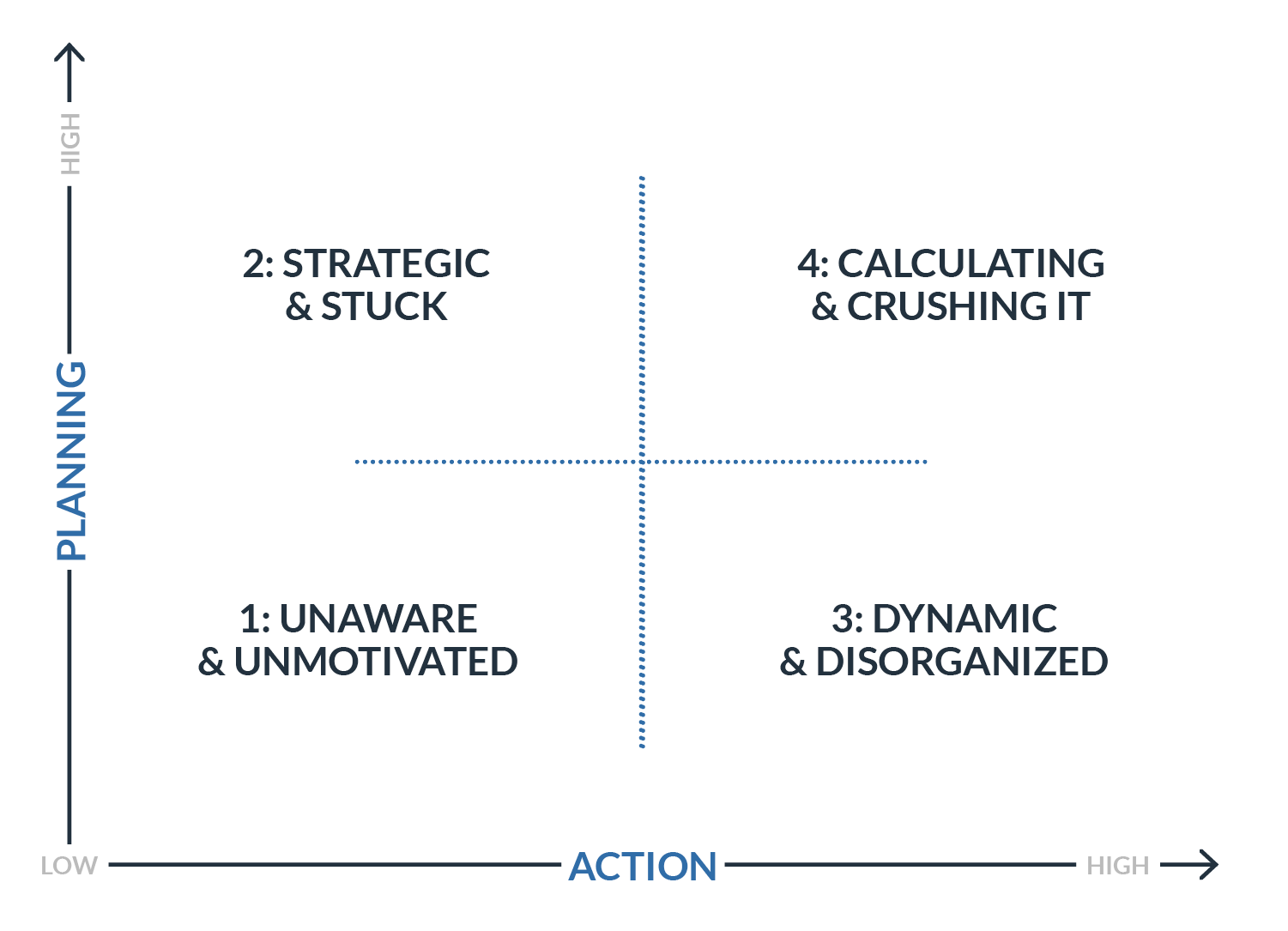
Reflect on the past season. When it comes to change, have you reaped the rewards of strategic and thorough planning? Have you also embraced the advantages that come from courageously taking action? Take a look at the assessment below and determine which quadrant best describes where you (and your team) are spending the most time in these days.