A Home. A Job. A Friend.
During my nine years at the helm of a 40-bed homeless shelter, I quickly learned that eradicating homelessness and getting individuals off the streets and into safe, sustainable housing involved staggering complexity. Our change management strategy, which applied to each person who walked through our doors, encompassed a dizzying array of elements—housing, employment, healthcare, community reintegration, education, and at times, addiction, mental health challenges, and past trauma.
The list seemed endless, and here’s the harsh truth: every component mattered. There was no silver bullet solution, no easy answer. The path to lasting life change demanded a holistic, personalized approach that wove together all these intricate threads.
As a team, we had to become well-versed—or partner with experts who were well-versed—in each of these areas. However, trying to explain this intricate web of services to those seeking our help was overwhelming for them, even paralyzing. And communicating our model for change to staff and volunteers in a way that inspired understanding, buy-in, and excitement seemed like an insurmountable task.
That’s when a mentor and homelessness expert, Dion Oxford, shared a profound truth that changed everything: For individuals to move away from a situation of homelessness, they need three things—a home, a job, and a friend. Deceptively simple yet deeply powerful.
A home didn’t necessarily mean home ownership, but it did mean a safe, secure place to experience community. A job might not equate to gainful employment, but it did mean the opportunity to contribute skills and energy in a meaningful way. And a friend represented authentic, supportive relationships, not just a transactional connection with a caseworker.
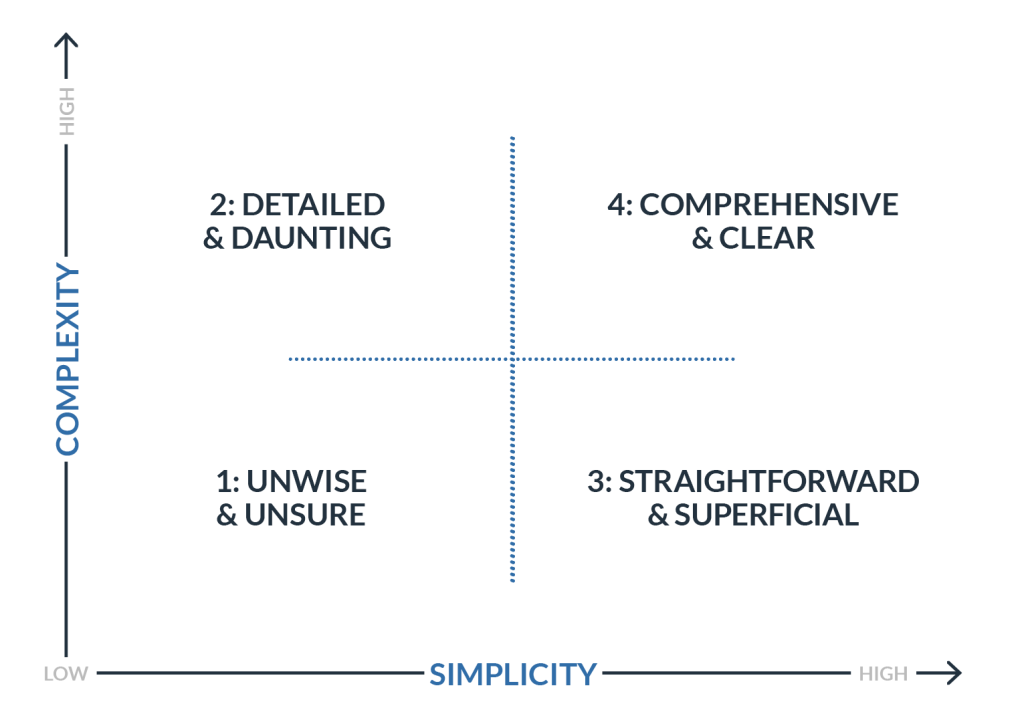
Suddenly, the overwhelming complexity of our work could be distilled into this incredibly straightforward framework. The 1,000 moving parts all fell under one of the three headings. And once we embraced this simplicity, everything shifted.
Those seeking our services understood the path forward. Staff and volunteers rallied around a shared language and vision. The community grasped our approach, leading to heightened volunteerism, donations, and partnerships. By holding the complexity and simplicity in tension, we unlocked a transformative synergy that propelled our mission forward.
Real-Time Assessment
Reflect on your recent change management experiences. Have you fully leveraged the advantages that come from leaning into complexity? Have you shown the flexibility required to achieve the benefits of simplicity? Check out the chart below and determine which quadrant your team has been spending the most time in.